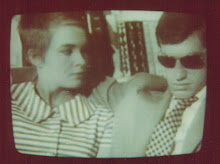
Whenever a book is a bestseller and made into a highly-promoted film with months of advanced promotion and numerous television and radio interviews with the book's author and starring celebrity actress, I want to not like the movie. I resisted this book initially because of it's book club popularity, but my sister gave it to me for Christmas a few years ago and I completely enjoyed reading it.
One Woman's Search for Everything Across Italy, India and Indonesia states the cover page inside Eat Pray Love. This book is not the "chick lit" I expected. I went on to read Elizabeth Gilbert's earlier book The Last American Man. I later picked up and the one that came after the success of EPL--a deep look into relationship and marriage--Committed. She is a researcher who tells the truth of a story with many interesting side stories, quotes, and facts. I find her writing to be quite engaging.
Ryan Murphy (Glee, Nip Tuck, Running With Scissors) wrote the screenplay adaptation and directed the film. Brad Pitt is listed as a producer. The opening day audience at the North Park Theater was largely groups of women. This may be the "chick flick" of the summer season, but a few men will also enjoy Gilbert's world of discovery through picturesque travel through three countries. The story opens with a quote from the book that ponders Virginia Woolf...
"Across the broad continent of a women's life falls the shadow of a sword. On one side there lies convention and tradition and order where all is correct. But on the other side of that sword, if you're crazy enough to cross it and choose a life that does not follow conventions all is confusion. Nothing follows a regular course."
The story takes us along with Liz Gilbert (Julia Roberts) as she crosses that shadow. Plagued with the feeling that she no longer wishes to have children. She no longer wishes to be married to nice guy husband, Stephen (Billy Crudup). She wants to travel--he does not. She no longer wants to live in the big, lonely dream house. This is her painful truth. Despite commitments and vows, Liz walks away to find herself, but first she crosses paths with a new man, David (James Franco). The actor/yogi becomes the catalyst for her spiritual awakening.
Liz Gilbert loves men of all kinds and the film is full of them--many are young and handsome with lovely accents. Richard from Texas (Richard Jenkins) is the annoying, but generous man who befriends Liz at an ashram in India. Felipe (Javier Bardem) nearly kills Liz with his truck in Bali--then captures her heart. Ketut (Hadi Subiyanto) is the medicine man who grounds her when confusion intervenes.
Italy serves to awaken in her the romance of pleasure. India offers a taste of devotion, stillness, compassion. Wisdom and love await her in Bali.
Liz attends an Italian language school while in Rome so her chapters there are full of the rhythm and romance of those words. The story is woven together with the thread of a conversation among friends in Italy--the notion that each each place and person has a word. Rome's word is sex. Giovanni's word is half-assed. Luca Spaghetti's word is surrender. She does not know what her word is, but by the end of the film, Liz finally names a word. Attraversiamo--Let's cross over. The story celebrates living on the border between the stability of tradition and the promise and peril of the unknown and making choices to go one way or another.
8/15/10

8/13/10
Southern Comfort (2001)
Kate Davis created this HBO documentary that won the Grand Jury Prize at the 2001 Sundance Festival. The film tells the story of Robert Eads, a female-to-male transexual dying from ovarian cancer. Pipe-smoking, leather-lined and bearded with a wirey body, he refers to himself as "a hillbilly and proud of it." Robert tells about his life and how he found peace living his trailer on the land in the back hills of Georgia.
We meet various transexual friends, who he considers his "chosen family." As we learn about Robert's journey to become a man, we also hear the stories of people in his community. Much of the filming took place leading up to the transexual community's big convention in Atlanta--Southern Comfort.
Robert was born a woman, gave birth to two sons, and lived the life of a lesbian until beginning gender transition at age thirty-five. The cancer was quite advanced when he began seeking medical help and after being turned away by two dozen doctors, he finally found some treatment, but it was too late. Medical care is difficult to obtain for people in the transgender community...sometimes worse for female-to-males. This story of being stigmatized in numerous ways is a common theme here.
We meet Lola, Robert's tall stylish male-to-female girlfriend who still presents himself as male at work. We also meet Max, a younger female-to-male who Robert had taken under his wing and calls his son. During the filming, Robert's parents visit and we learn how they have grown to accept his situation over time. We also meet one of Robert's sons and his little boy. Robert is especially touched to have this grandson who knows him only as Grandpa. The son admits that he continues to relate to Robert as his mother, despite the transformed appearance.
These complex relationships are fascinating to learn about. Generally, people who feel the need to pursue the gender reassignment are working people who struggle to save money for the surgery and tend to end up in undesirable medical situations, often with no medical follow-up care. Robert mentions one person who lived in a tent and saved all his money for years in order to pursue gender reassignment. Robert speaks candidly about his own surgeries, hormones and psychological aspects of this experience.
While this issue may be difficult for many to grasp and take seriously, the film offers so much compassion and wisdom. People often have enough difficulties finding kindred spirits in life--even in busy urban areas--it is a wonder that in the back woods of the south an entire community has been found by Robert Eads. They care of one another. They have love and friendship. It's a beautiful story. I have been drawn to other such stories...Middlesex, Trans-Sister Radio, TransAmerica, Prodigal Sons.
We watch him in his weakened state thrilled to be dressed up for the convention dinner dance with his lovely Lola. He calls it "the prom that never was." Robert passed away soon after that evening.
We meet various transexual friends, who he considers his "chosen family." As we learn about Robert's journey to become a man, we also hear the stories of people in his community. Much of the filming took place leading up to the transexual community's big convention in Atlanta--Southern Comfort.
Robert was born a woman, gave birth to two sons, and lived the life of a lesbian until beginning gender transition at age thirty-five. The cancer was quite advanced when he began seeking medical help and after being turned away by two dozen doctors, he finally found some treatment, but it was too late. Medical care is difficult to obtain for people in the transgender community...sometimes worse for female-to-males. This story of being stigmatized in numerous ways is a common theme here.
We meet Lola, Robert's tall stylish male-to-female girlfriend who still presents himself as male at work. We also meet Max, a younger female-to-male who Robert had taken under his wing and calls his son. During the filming, Robert's parents visit and we learn how they have grown to accept his situation over time. We also meet one of Robert's sons and his little boy. Robert is especially touched to have this grandson who knows him only as Grandpa. The son admits that he continues to relate to Robert as his mother, despite the transformed appearance.
These complex relationships are fascinating to learn about. Generally, people who feel the need to pursue the gender reassignment are working people who struggle to save money for the surgery and tend to end up in undesirable medical situations, often with no medical follow-up care. Robert mentions one person who lived in a tent and saved all his money for years in order to pursue gender reassignment. Robert speaks candidly about his own surgeries, hormones and psychological aspects of this experience.
While this issue may be difficult for many to grasp and take seriously, the film offers so much compassion and wisdom. People often have enough difficulties finding kindred spirits in life--even in busy urban areas--it is a wonder that in the back woods of the south an entire community has been found by Robert Eads. They care of one another. They have love and friendship. It's a beautiful story. I have been drawn to other such stories...Middlesex, Trans-Sister Radio, TransAmerica, Prodigal Sons.
We watch him in his weakened state thrilled to be dressed up for the convention dinner dance with his lovely Lola. He calls it "the prom that never was." Robert passed away soon after that evening.
7/26/10
I Am Love (2009)
lo sono l'amore...this film is an Italian language film with subtitles.
I was not sure about seeing this Luca Guadagnino film, but the operatic family drama about turn of the millennium Milan and a dynasty of industrial wealth is not boring or predictable. I would see anything with Tilda Swinton, who is cast as Emma, the Russian immigrant to Italy who is married to Tancredi, the son of the Recchi Clothing tycoon. Now the mother of three grown children (Edo, Gianluca, Betta), she is planning a party for the Recchi patriarch as he prepares to name an heir to the family business.
Life in the haute bourgeoisie is full of beauty, lavish foods, fabrics, art. Lovely at middle age in her sheath dresses and mile-high pumps, Emma is the lithe maternal goddess who binds the family together. Self-contained and enigmatic, she seems to enjoy little marital intimacy, despite the stately bedroom she shares with Tancredi. Who is she really? As the young people party outside by the pool, she sits alone high above all the action stitching her needlepoint, content to close herself away with drawn drapes. We do begin to learn more about her as the story unfolds and a younger man captures her attention.
Everyone in this film is attractive. Marisa Berenson is the glistening and glamorous wife of the patriarch, mother to Tancredi. We begin to see that the loveliness and sparkle of this world is not as solid as it seems. What happens to tradition and stability when sweeping changes blow through the Recchi family?
Edo has partnered with a progressive young chef to open a restaurant. Betta has broken up with her boyfriend and moved to London, where she is finding herself in new ways. Gianluca and his wife are expecting their first child. The Recchi clothing business faces a new chapter as we watch that drama unfold in the corporate boardroom. A turbaned businessman speaks eloquently about the necessity of business to change in response to a rapidly growing world population.
Each member of the Recchi family face their own personal transformation as the container shatters. The pace of this film builds slowly as the stage is set for the unexpected events to unfold and by the end, one walks out of the theater feeling the effect of an emotional roller coaster. The story lingers with me.
See archives on sidebar for reviews of other Tilda Swinton films (Julia--Oct. 2009, Limits of Control--Dec. 2009, Broken Flowers--Jan. 2010).
I had recently seen two other films that share common themes of infidelity and inevitability of personal change that comes along with that. I liked both films very much...
The Kids Are Alright features an American middle-class family featuring lesbian mothers with two teenage children.
Cloud 9 is a German language film with subtitles featuring a lower middle-class married couple with a grown daughter and young grandchildren.
I was not sure about seeing this Luca Guadagnino film, but the operatic family drama about turn of the millennium Milan and a dynasty of industrial wealth is not boring or predictable. I would see anything with Tilda Swinton, who is cast as Emma, the Russian immigrant to Italy who is married to Tancredi, the son of the Recchi Clothing tycoon. Now the mother of three grown children (Edo, Gianluca, Betta), she is planning a party for the Recchi patriarch as he prepares to name an heir to the family business.
Life in the haute bourgeoisie is full of beauty, lavish foods, fabrics, art. Lovely at middle age in her sheath dresses and mile-high pumps, Emma is the lithe maternal goddess who binds the family together. Self-contained and enigmatic, she seems to enjoy little marital intimacy, despite the stately bedroom she shares with Tancredi. Who is she really? As the young people party outside by the pool, she sits alone high above all the action stitching her needlepoint, content to close herself away with drawn drapes. We do begin to learn more about her as the story unfolds and a younger man captures her attention.
Everyone in this film is attractive. Marisa Berenson is the glistening and glamorous wife of the patriarch, mother to Tancredi. We begin to see that the loveliness and sparkle of this world is not as solid as it seems. What happens to tradition and stability when sweeping changes blow through the Recchi family?
Edo has partnered with a progressive young chef to open a restaurant. Betta has broken up with her boyfriend and moved to London, where she is finding herself in new ways. Gianluca and his wife are expecting their first child. The Recchi clothing business faces a new chapter as we watch that drama unfold in the corporate boardroom. A turbaned businessman speaks eloquently about the necessity of business to change in response to a rapidly growing world population.
Each member of the Recchi family face their own personal transformation as the container shatters. The pace of this film builds slowly as the stage is set for the unexpected events to unfold and by the end, one walks out of the theater feeling the effect of an emotional roller coaster. The story lingers with me.
See archives on sidebar for reviews of other Tilda Swinton films (Julia--Oct. 2009, Limits of Control--Dec. 2009, Broken Flowers--Jan. 2010).
I had recently seen two other films that share common themes of infidelity and inevitability of personal change that comes along with that. I liked both films very much...
The Kids Are Alright features an American middle-class family featuring lesbian mothers with two teenage children.
Cloud 9 is a German language film with subtitles featuring a lower middle-class married couple with a grown daughter and young grandchildren.
7/10/10
Please Exit Through The Gift Shop (2010)
 Coming soon to a theater near you...
This Bansky film premiered at Sundance in March. It may be awhile before it makes it to Buffalo so while visiting Manhattan I walked through the buzzy streets of East Houston to see it at the Sunshine Cinema.
I became interested in the elusive artist, Bansky, after hearing that an art object made by him was mentioned in Dennis Hopper's messy divorce that was in the news a couple months ago. The film explores the street art scene that actually began in the 1980s and later evolved into the image-based graphic style of the last ten-twenty years.
Through the lens of videographer, Thierry Guetta, we see an emerging scene that he observes and films while visiting France. His cousin, Space Invader, subversively installs lo-tech images of the video game character using small colored tiles in random public places. As he learns more about the scene, Guetta becomes curious to find out more about notorious counter-cultural prankster, Bansky. The British artist is known for graphic figures that appear in public places...such as an image of a police officer with a pink balloon dog or homeless man holding a sign that reads Keep Your Coins I WANT CHANGE.
In the United States, Shepard Fairey's experiment in phenomenology began appearing in the 1990s when he distributed stickers to the skater community with an image of 7'4", 500 pound wrestler, Andre the Giant. His OBEY giant logo is plastered on walls all over the world. He later created the HOPE poster of Barack Obama that was used as the 2008 campaign poster. The scene is not all male...Swoon's large-scale images of everyday people doing everyday things began appearing on walls in New York during this past decade.
While telling a story about the street art scene, Guetta interviews Bansky in the style of a 20/20 profile of someone in witness protection...with voice alteration and blurred face. We learn that Thierry Guetta is a frenchman living in L.A. with a family and clothing business. Through Bansky's participation in this film project, Guetta becomes inspired to take on the name Mr. Brainwash and begin making his own brand of street art. Much of this work features alterations of popular iconic cultural imagery, such as the one above, titled Jackson (Pollock). Success follows him as thousands attend his 2008 L.A. show, Life Is Beautiful, and Madonna commissions him to design the album cover for Celebration. Prior to the Sundance screening of this film, Mr. Brainwash had his first NYC show.
Anyone who has attended a large museum show lately knows that these events strategically exit everyone through an enticing gift shop display devoted entirely to items related that particular show. The art souvenir has become equivalent to the art experience. The film raises many questions. What is art? Can a commodity be art? Is the film entirely self-promotion? Is Mr. Brainwash simply another way for Bansky to express his own art? No matter what, the film is entertaining and provocative.
Subscribe to:
Posts (Atom)