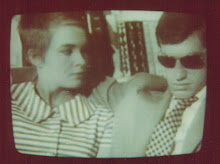
Evening Primrose: Anothony Perkins sings in this odd musical about a poet finding love & refuge in a department store after hours.
Crimes of Passion: Kathleen Turner is a high-powered garment district professional by day and kiny hooker by night.
El Camino: Martin Sheen walks the ancient 500-mile pilgrimage in northern Spain after his son dies during his pilgrimage hike.
Shotgun Freeway: The history of Los Angeles and the creatives who thrive there, including clips of interviews frm David Hockney, Joan Didion.
Up In The Air: George Clooney is a "termination enginer" who treasures his life in the air--constantly traveling. He meets kindred spirit, Vera Fermiga, another professional business traveler. Their relationship explores a role reversal situation.
Poetry: This Korean language film explores one woman's struggles to raise her grandson and discovers relief when she takes a poetry class and begins to write.
The Music Never Stopped: This fantastic story about a father and son who begin to understand one another through music (especially the Gratefu Dead)...based on an Oliver Sacks story called "The Last Hippie."
11/19/11

9/3/11
Painters Painting (1972)
Emile de Antonio made this documentary about his friends in New York City who happened to be the abstract expressionist painters who changed the history of art during the post-world war II years. The artists who reacted against the modern art world of Picasso's cubism were a small group who seemed to own the New York art world. Many were immigrants. Many came from poor families. Many earned a lot of money.
"You have to have time to feel sorry for yourself if you're going to be a good abstract expressionist painter," said Robert Rauschenberg.
Helen Frankenthaler explained "I did not want to create a small gesture standing at an easel with a sable brush." She wanted her paintings to appear as if they were created all at once with one stroke. The interviewer asked her if it was a problem being a female painter. She set him straight. "The first issue is a being a painter."
"My paintings are an invitation to look somewhere else," said Jasper Johns. He revealed that his motivation for becoming a artist was simply a way to get out of "this." He added that if he could tell that he was doing what another painter was doing, he would stop doing that.
Andy Warhol remarked "everybody is influenced by everybody." That remains a truism for the post-modern world.
Pop was a reaction against the action painters. A small group of artists began working in a more classical, controlled way. It was less romantic and not at all improvisational.
Frank Stella is interviewed extensively about this shift. He felt that the expressionists original impulse to make a big gesture became compromised when the wildness was worked over too much. His approach was less an invitation and more a presentation. The emphasis was not on "reading" a painting. Rather than make a record of an event, the goal was to present something that left the viewer unable to know how it was made.
The film includes interviews with many more of the era's artists, dealers, and collectors. They look at the reality that painting has always been for the rich. Other artform, such as writing an film, can be enjoyed by the masses. Traditionally painters are able to survive and continue working due to the support of wealthy patrons. The DVD also includes an interview with de Antonio.
The film shows the art world of forty years ago to be fresh in ways no longer possible.
"You have to have time to feel sorry for yourself if you're going to be a good abstract expressionist painter," said Robert Rauschenberg.
Helen Frankenthaler explained "I did not want to create a small gesture standing at an easel with a sable brush." She wanted her paintings to appear as if they were created all at once with one stroke. The interviewer asked her if it was a problem being a female painter. She set him straight. "The first issue is a being a painter."
"My paintings are an invitation to look somewhere else," said Jasper Johns. He revealed that his motivation for becoming a artist was simply a way to get out of "this." He added that if he could tell that he was doing what another painter was doing, he would stop doing that.
Andy Warhol remarked "everybody is influenced by everybody." That remains a truism for the post-modern world.
Pop was a reaction against the action painters. A small group of artists began working in a more classical, controlled way. It was less romantic and not at all improvisational.
Frank Stella is interviewed extensively about this shift. He felt that the expressionists original impulse to make a big gesture became compromised when the wildness was worked over too much. His approach was less an invitation and more a presentation. The emphasis was not on "reading" a painting. Rather than make a record of an event, the goal was to present something that left the viewer unable to know how it was made.
The film includes interviews with many more of the era's artists, dealers, and collectors. They look at the reality that painting has always been for the rich. Other artform, such as writing an film, can be enjoyed by the masses. Traditionally painters are able to survive and continue working due to the support of wealthy patrons. The DVD also includes an interview with de Antonio.
The film shows the art world of forty years ago to be fresh in ways no longer possible.
9/2/11
Quid Pro Quo (2008)
Carlos Brooks wrote and directed this offbeat film that takes semi-paralyzed radio reporter, Isaac (Nick Stahl). We learn that Isaac is wheelchair bound after a car accident as a boy, but he works at staying strong and maintains hope that one day he will walk again. He is disheartened after the woman he loves has turned down his marriage proposal because she believes one person in a marriage should be able to walk.
The radio station receives a tip from a hospital employee that a man had recently tried to bribe a doctor to amputate his leg. Isaac is sent out to investigate the odd subculture of people obsessed with the need to remove limbs in order to feel whole.
Isaac reluctantly meets with Fiona (Vera Farmiga), who has learned of his investigation and offers to share her knowledge the identity disorder. The attractive woman's fascination with him is both troubling and flattering. As Isaac becomes more deeply involved with Fiona, he begins to suspect that they share some important history. As truths are revealed, both are transformed--something is given for something received (quid pro quo).
The radio station receives a tip from a hospital employee that a man had recently tried to bribe a doctor to amputate his leg. Isaac is sent out to investigate the odd subculture of people obsessed with the need to remove limbs in order to feel whole.
Isaac reluctantly meets with Fiona (Vera Farmiga), who has learned of his investigation and offers to share her knowledge the identity disorder. The attractive woman's fascination with him is both troubling and flattering. As Isaac becomes more deeply involved with Fiona, he begins to suspect that they share some important history. As truths are revealed, both are transformed--something is given for something received (quid pro quo).
9/1/11
Never Forever (2007)
During a lull in my Netflix viewing schedule, I have delved into the films of Vera Farmiga, an intriguing actress who seems to be on the rise. I enjoyed her performance with George Clooney in Up in the Air a couple years ago.
Gina Kim's film shows us a successful American urban couple trying to conceive a child. Sophie (Vera Farmiga) and Andrew (David McInnis) are under pressure from his devout Korean catholic family. After her husband's disturbing suicide attempt, Sophie becomes more desperate to become pregnant. She seeks the help of a handsome Korean immigrant she sees turned away at her fertility clinic and offers him a "job" that will change both their lives.
Farmiga is wonderful to watch as this story unfolds slowly. I look forward to watching several of her more recent films.
Gina Kim's film shows us a successful American urban couple trying to conceive a child. Sophie (Vera Farmiga) and Andrew (David McInnis) are under pressure from his devout Korean catholic family. After her husband's disturbing suicide attempt, Sophie becomes more desperate to become pregnant. She seeks the help of a handsome Korean immigrant she sees turned away at her fertility clinic and offers him a "job" that will change both their lives.
Farmiga is wonderful to watch as this story unfolds slowly. I look forward to watching several of her more recent films.
8/31/11
Cable Network Series on DVD
I do not have HBO or Showtime. I am one of those people who does not watch much tv. Although I did enjoy the occasional episode of The Practice on network television this past year.
I like movies, but finding good movies is not always easy. Inbetween, I watch cable television series as they become available on DVD. I think of this viewing experience as other than television because the actors are known from movies and there are no commercials. Watching one episode after the other is more like a big movie.
Actually, these DVDs are more like super-tv. Every aspect of these shows is calculated to entice.The music alone is intoxicating and lures me into a unique world that is hugely addictive. How about a soundtrack of the theme songs from some of the better shows? MadMen, Damages, Breaking Bad, Californication, The L Word. Who comes up with this stuff? It's like heroin.
I don't know how many times I have pressed the pause button to walk away from the screen and spoken these words out loud... "This is soooooo good!"
Did you know that Netflix subscribers can access their entire rental history? I see that I signed on in April 2003. There is a novel of viewing that anchors the last 8 years of my life onto the culture of media.
The first series I became hooked on was Sex in the City. I truly mourned the conclusion of that one, but I'm not sure how all these older seasons play out now. They are not exactly timeless. Around that time I also fell hard for Six Feet Under. Sooner or later, all good series come to an end and watching that final episode is bittersweet.
One series that keeps on going is Rescue Me. I have two seasons coming up in a couple weeks.
This may the end for the long-running show. There is such a long gap between new season releases that I care for less for this story as time passes, but then again, Dennis Leary is great. I may get sucked in once again.
I see on my history that there were a number of series that I gave up on after one or two seasons. No need to dwell on those, but the ones I watched until the end are worth mentioning--Nip Tuck, The L Word, Damages In Treatment, Lie to Me, Californication.
Some may have more seasons coming up--The Big C, Weeds, Bored to Death, Nurse Jackie, The Good Wife, Curb Your Enthusiasm, MadMen, Breaking Bad (can't wait for the next release).
One short run featured Jane Alexander as a marriage counselor. Tell Me You Love Me is worth checking out. I have noticed some of the actors from that one turn up in other films and shows.
On the other hand, it is curious to me that other actors who shine in some of these series seem bound for bigger and better things, but then I continue to see them in B movies. Justin Kirk comes to mind--he plays Andy Botwin in Weeds.
Before we had this more interesting level of television in the 2000s, there was the mini-series, Tales of the City, based on Armistead Maupin's serialized stories printed in The SanFrancisco Chronicle back in the 1970s. Laura Linney as MaryAnn Singleton, the young woman from the midwest who lands in 1970s SanFrancsco. It's a bit dated, but still enjoyable because of Linney who currently stars in The Big C, another promising new series.
A couple other good documentary series originally broadcast on PBS...7-Up and Art21.
Yes, I watch television.
I like movies, but finding good movies is not always easy. Inbetween, I watch cable television series as they become available on DVD. I think of this viewing experience as other than television because the actors are known from movies and there are no commercials. Watching one episode after the other is more like a big movie.
Actually, these DVDs are more like super-tv. Every aspect of these shows is calculated to entice.The music alone is intoxicating and lures me into a unique world that is hugely addictive. How about a soundtrack of the theme songs from some of the better shows? MadMen, Damages, Breaking Bad, Californication, The L Word. Who comes up with this stuff? It's like heroin.
I don't know how many times I have pressed the pause button to walk away from the screen and spoken these words out loud... "This is soooooo good!"
Did you know that Netflix subscribers can access their entire rental history? I see that I signed on in April 2003. There is a novel of viewing that anchors the last 8 years of my life onto the culture of media.
The first series I became hooked on was Sex in the City. I truly mourned the conclusion of that one, but I'm not sure how all these older seasons play out now. They are not exactly timeless. Around that time I also fell hard for Six Feet Under. Sooner or later, all good series come to an end and watching that final episode is bittersweet.
One series that keeps on going is Rescue Me. I have two seasons coming up in a couple weeks.
This may the end for the long-running show. There is such a long gap between new season releases that I care for less for this story as time passes, but then again, Dennis Leary is great. I may get sucked in once again.
I see on my history that there were a number of series that I gave up on after one or two seasons. No need to dwell on those, but the ones I watched until the end are worth mentioning--Nip Tuck, The L Word, Damages In Treatment, Lie to Me, Californication.
Some may have more seasons coming up--The Big C, Weeds, Bored to Death, Nurse Jackie, The Good Wife, Curb Your Enthusiasm, MadMen, Breaking Bad (can't wait for the next release).
One short run featured Jane Alexander as a marriage counselor. Tell Me You Love Me is worth checking out. I have noticed some of the actors from that one turn up in other films and shows.
On the other hand, it is curious to me that other actors who shine in some of these series seem bound for bigger and better things, but then I continue to see them in B movies. Justin Kirk comes to mind--he plays Andy Botwin in Weeds.
Before we had this more interesting level of television in the 2000s, there was the mini-series, Tales of the City, based on Armistead Maupin's serialized stories printed in The SanFrancisco Chronicle back in the 1970s. Laura Linney as MaryAnn Singleton, the young woman from the midwest who lands in 1970s SanFrancsco. It's a bit dated, but still enjoyable because of Linney who currently stars in The Big C, another promising new series.
A couple other good documentary series originally broadcast on PBS...7-Up and Art21.
Yes, I watch television.
7/24/11
Starting Out in the Evening (2007)
Andrew Wagner’s film features Professor Leonard Schiller (Frank Langella), an aging novelist with failing health who encounters Heather (Lauren Ambrose) a young, attractive and ambitious grad student who has her heart set on writing her thesis about Leonard’s work.
Set before the backdrop of the New York City world of literature and publishing, he is focused upon completing what is to be his last novel. He tells Heather that her thesis project would simply be an unnecessary distraction. She is peristant, though--eventually proves herself to be a worthy candidate for the task, as she is an excellent student of his work. He begins to be flattered by her attention and she soon convinces him that this could revive his fading career and perhaps add some much-needed sparkle to his quiet life. He agrees to grant her a few interviews.
Meanwhile, his only daughter, Ariel (lily Taylor), a former dancer who is now a pilates and yoga instructor, is approaching 40 and desperately wishes to have a child before it is too late. Leonard wonders if her upbringing has anything to do with her ongoing distress on this front. The man she loves wants no part of it and the man who loves her leaves her cold.
Leonard’s publisher tells him that the only books they are accepting these days are celebrity confessionals and self-help books. He views himself more and more as a dying breed of writer. There is a sadness about him that intrigues Heather. We learn that his wife had been a psychotherapist who had died when Ariel was quite young. He reveals…”I would not be a writer if I had been blinded by optimism.”
Heather continuously digs to find out more about the connection between the wife and several of the author’s female characters. She wonders how much is autobiographical. Leonard finds this inquiry exhausting. It shakes the safety of his small world. She claims that his early work saved her life during a troubling time several years ago. The strength of his female characters and the freedom in his relationships left an impression.”You gave me the courage to live my own life.”
Leonard tells her that “freedom is not the choice that the world encourages—you have to wear a suit of armor to defend it.”
Heather refers to Hemingway’s premise that writers have threads of gold that run through their work—it makes up a solid gold bar. She is in search of Leonard’s “gold bar."
Heather confides some of her doubts about Leonard's later work to a well-regarded editor at the Village Voice who encourages Heather to speak the truth even if people get hurt and advises “When you speak with conviction, people notice.”
The relationship between Heather and Leonard becomes complex…he seems to enjoy his role as mentor for Heather as she is formulating her perspective on his work. There is a touch of the romantic, but she completes the project and his health problems escalate.
Leonard tells his daughter that the thesis is "half-baked," but he truthfully respects what Heather has to say. Ariel arrives in a much happier place in her life. Leonard continues to struggle with comletion of his last novel.
This is a quiet and touching story about modern life, aging, love, and art—worth watching.
Set before the backdrop of the New York City world of literature and publishing, he is focused upon completing what is to be his last novel. He tells Heather that her thesis project would simply be an unnecessary distraction. She is peristant, though--eventually proves herself to be a worthy candidate for the task, as she is an excellent student of his work. He begins to be flattered by her attention and she soon convinces him that this could revive his fading career and perhaps add some much-needed sparkle to his quiet life. He agrees to grant her a few interviews.
Meanwhile, his only daughter, Ariel (lily Taylor), a former dancer who is now a pilates and yoga instructor, is approaching 40 and desperately wishes to have a child before it is too late. Leonard wonders if her upbringing has anything to do with her ongoing distress on this front. The man she loves wants no part of it and the man who loves her leaves her cold.
Leonard’s publisher tells him that the only books they are accepting these days are celebrity confessionals and self-help books. He views himself more and more as a dying breed of writer. There is a sadness about him that intrigues Heather. We learn that his wife had been a psychotherapist who had died when Ariel was quite young. He reveals…”I would not be a writer if I had been blinded by optimism.”
Heather continuously digs to find out more about the connection between the wife and several of the author’s female characters. She wonders how much is autobiographical. Leonard finds this inquiry exhausting. It shakes the safety of his small world. She claims that his early work saved her life during a troubling time several years ago. The strength of his female characters and the freedom in his relationships left an impression.”You gave me the courage to live my own life.”
Leonard tells her that “freedom is not the choice that the world encourages—you have to wear a suit of armor to defend it.”
Heather refers to Hemingway’s premise that writers have threads of gold that run through their work—it makes up a solid gold bar. She is in search of Leonard’s “gold bar."
Heather confides some of her doubts about Leonard's later work to a well-regarded editor at the Village Voice who encourages Heather to speak the truth even if people get hurt and advises “When you speak with conviction, people notice.”
The relationship between Heather and Leonard becomes complex…he seems to enjoy his role as mentor for Heather as she is formulating her perspective on his work. There is a touch of the romantic, but she completes the project and his health problems escalate.
Leonard tells his daughter that the thesis is "half-baked," but he truthfully respects what Heather has to say. Ariel arrives in a much happier place in her life. Leonard continues to struggle with comletion of his last novel.
This is a quiet and touching story about modern life, aging, love, and art—worth watching.
7/22/11
Miral (2010)
Julian Schnabel was a rising art star in the 1980s. His paintings often reference history, culture, and literature. In the 1990s he added films to his art repertoire. During the last fifteen years he made Basquiat, Before Night Falls, Diving Bell and Butterfly leading up to this latest journey. Each film shows a person struggling through adversity.
This time, he visits the wartorn border areas joining Palestine and Israel, a controversial film about a conflict that continues today.
The story begins in 1947 when Hind al-Husseini uses her wealth to feed and educate orphaned children. The film takes us to the aftermath of the Six-Day War in 1967 when Israeli military occupied areas of Palestine--the West Bank, Gaza Strip, Golan Heights, and East Jerusalem.
We learn about a young teen named Nadia who runs away from a home where she has been repeatedly raped by a caretaker. She lands into a life as an exotic dancer and heavy drinking. She eventually lands in jail for an assault charge. She meets a nurse named Fatima, who was serving 2 life sentences after becoming involved with terrorists. She entered a movie theater showing the Roman Polanski film, Repulsion--leaves a bag with a bomb in a bag on the floor.
Fatima arranges a marriage for Nadia with her brother upon her release from jail. He provides a good life and truly loves her. In 1973 Nadia gives birth to daughter, Miral. This is her story.
Nadia remains troubled. She goes out at night, leaving Miral under the care of her father, a kid a loving man. Nadia ends her life by walking out into the sea. Miral is taken to Hind's orphanage school to live during the week while he is at work.
In 1987 when Miral (Frieda Pinto) is a teen during the "infitada," when poor Palestinian workers were run over by a convoy. Several of Hind's girls, including Miral, are sent to teach the orphaned children in a refugee camp. She becomes politicized there when she encounters a radical group and her first boyfriend. This leads her to be captured and tortured for information at age 17.
Her father fears for her, desperate to save her from the troubled lives of his sister and her mother. He manages to have her released. Soon after this time, he reveals to Miral that she is not his biological child.
Miral befriends an Israeli girl named Lisa (Stella Scnabel) and is exposed to new ideas. She suffers the loss of her boyfriend and father. Grieving and uncertain about the future, she visits Hind once more. An old woman by this time, Hind is proud of Miral's convictions--encourages her to pursue further education. Miral wishes to become a journalist.
The film ends with mention of The Oslo Agreement in 1993, a plan for two independent states that has never been honored. Miral does go on to become a journalist and writer of her own story.
This is a complex political biopic that has been received with mixed reviews. I do not have strong views about the Israeli-Palestine conflict so I could watch it as a beautiful story. The cinematography is very good. The screenply was written by Rulla Jebreal, based her novel of true events in her life. Julian Schnabel apparently had a close relationship with her so there is an authenticity to the entire experience that is hard to deny. The soundtrack includes several pieces by composer, Laurie Anderson.
Another gorgeous art film.
DVD extras show Schnabel in his studio with the many paintings he has made of Miral, who he refers to as his muse. Schnabel speaks about how his process of doing painting and film informs what he gets in the end. I appreciate this way of working. In another extra about making the movie, he tells his camerman "follow your bliss."
He claims that Jebreal's book changed his life. When critics accused him of being anti-semetic, he nearly bought back the movie, but he explains that a shift in public opinion occurred. Still, the film opened in just 10 markets. Schnabel adds that is important to make a movie about what is happening now. That moment in 1993 when an agreement was made offered enormous hope to many people, but the hope is now stopped due to not enough progress.
This time, he visits the wartorn border areas joining Palestine and Israel, a controversial film about a conflict that continues today.
The story begins in 1947 when Hind al-Husseini uses her wealth to feed and educate orphaned children. The film takes us to the aftermath of the Six-Day War in 1967 when Israeli military occupied areas of Palestine--the West Bank, Gaza Strip, Golan Heights, and East Jerusalem.
We learn about a young teen named Nadia who runs away from a home where she has been repeatedly raped by a caretaker. She lands into a life as an exotic dancer and heavy drinking. She eventually lands in jail for an assault charge. She meets a nurse named Fatima, who was serving 2 life sentences after becoming involved with terrorists. She entered a movie theater showing the Roman Polanski film, Repulsion--leaves a bag with a bomb in a bag on the floor.
Fatima arranges a marriage for Nadia with her brother upon her release from jail. He provides a good life and truly loves her. In 1973 Nadia gives birth to daughter, Miral. This is her story.
Nadia remains troubled. She goes out at night, leaving Miral under the care of her father, a kid a loving man. Nadia ends her life by walking out into the sea. Miral is taken to Hind's orphanage school to live during the week while he is at work.
In 1987 when Miral (Frieda Pinto) is a teen during the "infitada," when poor Palestinian workers were run over by a convoy. Several of Hind's girls, including Miral, are sent to teach the orphaned children in a refugee camp. She becomes politicized there when she encounters a radical group and her first boyfriend. This leads her to be captured and tortured for information at age 17.
Her father fears for her, desperate to save her from the troubled lives of his sister and her mother. He manages to have her released. Soon after this time, he reveals to Miral that she is not his biological child.
Miral befriends an Israeli girl named Lisa (Stella Scnabel) and is exposed to new ideas. She suffers the loss of her boyfriend and father. Grieving and uncertain about the future, she visits Hind once more. An old woman by this time, Hind is proud of Miral's convictions--encourages her to pursue further education. Miral wishes to become a journalist.
The film ends with mention of The Oslo Agreement in 1993, a plan for two independent states that has never been honored. Miral does go on to become a journalist and writer of her own story.
This is a complex political biopic that has been received with mixed reviews. I do not have strong views about the Israeli-Palestine conflict so I could watch it as a beautiful story. The cinematography is very good. The screenply was written by Rulla Jebreal, based her novel of true events in her life. Julian Schnabel apparently had a close relationship with her so there is an authenticity to the entire experience that is hard to deny. The soundtrack includes several pieces by composer, Laurie Anderson.
Another gorgeous art film.
DVD extras show Schnabel in his studio with the many paintings he has made of Miral, who he refers to as his muse. Schnabel speaks about how his process of doing painting and film informs what he gets in the end. I appreciate this way of working. In another extra about making the movie, he tells his camerman "follow your bliss."
He claims that Jebreal's book changed his life. When critics accused him of being anti-semetic, he nearly bought back the movie, but he explains that a shift in public opinion occurred. Still, the film opened in just 10 markets. Schnabel adds that is important to make a movie about what is happening now. That moment in 1993 when an agreement was made offered enormous hope to many people, but the hope is now stopped due to not enough progress.
7/20/11
Shadows and Lies (2010)
Director Jay Anania happens to have been one of James Franko’s teachers. This art film about a quiet and mysterious petty criminal named William (James Franko) is a compelling story that views like a book. Many questions surround events as they unfold and it demands a bit of pondering.
The meeting with Ann seals the deal. William agrees to try the delivery work, but Victor warns him to stay away from Ann, as she belongs to Boss. Julianne Nicholson is an intriguing actress who appears in another film reviewed here (see Archive for April 2011). She has a removed quality that is somewhat like the quality of Tilda Swinton, one of my favorites.
William finds the delivery work a bit tougher than expected. He was told to give Victor the envelope with money, but Ann shows up for it. She notices the kimono is not hanging in the same spot. He offers her the folded silk. “Can I try it on” She slips into the bathroom and comes out with nothing on but the kimono and lies down on his monk-size futon. He lays down on the floor next to her.
We learn that William, previously named Joseph, had been a young man with a love for Japan who experienced a life-changing event when he missed an airline flight to Japan. He later discovers that the flight he would have been on crashed with no survivors.
He gets off a bus in Manhattan, changes his identity to this William character and lives his life as if he actually been lost. He attends trade school to learn film editing, takes residence in a Chinatown storefront, and lives his eccentric life as an editor of educational nature films. In his spare time, he walks the streets, frequents cafes, and picks people’s pockets.
When a hardcore gangster observes him in action on the street one day, William's life takes a turn to a much darker side. Boss (Josh Lucas) is a dark, controlling drug runner looking for just the right delivery man. Victor (Martin Donovan) is the “muscle” guy who is ordered to get William for the job.
Victor tells him there is a woman he wants William to meet. “She’s a gift.” William turns down the offer, but Ann (Julianne Nicholson) shows up one afternoon anyway. She is quiet and respectful, but wastes no time asking “So who are you?” William offers her a glass of water. She admires the kimono hanging on his closet door. He shows her the film he is working on. They sit and watch a long segment about a jelly fish stirring in the sea. Wonderful music with organ or harmonium sounds add to a moody soundtrack.The meeting with Ann seals the deal. William agrees to try the delivery work, but Victor warns him to stay away from Ann, as she belongs to Boss. Julianne Nicholson is an intriguing actress who appears in another film reviewed here (see Archive for April 2011). She has a removed quality that is somewhat like the quality of Tilda Swinton, one of my favorites.
William finds the delivery work a bit tougher than expected. He was told to give Victor the envelope with money, but Ann shows up for it. She notices the kimono is not hanging in the same spot. He offers her the folded silk. “Can I try it on” She slips into the bathroom and comes out with nothing on but the kimono and lies down on his monk-size futon. He lays down on the floor next to her.
This is a film of suggestion. The connection between them is a danger to both. Boss eventually forbids them to ever see one another.
William’s behavior takes on a violent edge. Boss rewards him with $75,000 and forbids him to ever see Ann again. He leaves for a few years, but sends Ann a letter explaining things--then he returns to stalk her a bit, hoping to capture her from her prison with Boss.
This film is made for James Franco fans. I imagine many will not care for it. This is not passionate and hot film--it is disinterested, cool, and perplexing. I like it.
William’s behavior takes on a violent edge. Boss rewards him with $75,000 and forbids him to ever see Ann again. He leaves for a few years, but sends Ann a letter explaining things--then he returns to stalk her a bit, hoping to capture her from her prison with Boss.
This film is made for James Franco fans. I imagine many will not care for it. This is not passionate and hot film--it is disinterested, cool, and perplexing. I like it.
7/19/11
Buddhafest 2011
Tricycle magazine offered online participation in Buddhafest, a film festival held near Washington DC this summer. In addition to Crazy Wisdom (mentioned in the precious post), I watched three other ispiring documentaries to watch for...
With One Voice
Interviews with spiritual leaders investigate the nature of experiencing the "reality that the mind cannot grasp--peace." Some of the speakers include Joseph Goldstein, Joan Halifax Roshi, John Daido Loori, Thomas Keating.
Cave in the Snow
English woman, Diana Perry, was the daughter of a fishmonger in London' East End until she left home for the east on a spiritual journey. She became Jetsunma Tenzin Palmo, the first woman to take monk vows. She spent 12 years secluded in a cave and was quite happy there, but explains that "life ha a way of serving up what you need rather than what you think you want." She now oversees a nunnery in northern India to offer other women an opportunity for spiritual development.
Colors of Compassion
Thich Nhat Hanh offered a 4-day mindfulness training retreat to heal the divisions of color (Deer Park, California). Participants were interviewed throughout the retreat and spoke openly about their experiences as non-white Americans. There seemed to be a great sense of release and exhileration to be secluded in that accepting environment among others sharing similar experiences. Much of the film is quiet and simply observes and listens to Thich Nhat Hanh.
This also includes a wonderful bonus interview with Sister Dang Nghiem called Healing: A Woman's Journey from Doctor to Nun.
With One Voice
Interviews with spiritual leaders investigate the nature of experiencing the "reality that the mind cannot grasp--peace." Some of the speakers include Joseph Goldstein, Joan Halifax Roshi, John Daido Loori, Thomas Keating.
Cave in the Snow
English woman, Diana Perry, was the daughter of a fishmonger in London' East End until she left home for the east on a spiritual journey. She became Jetsunma Tenzin Palmo, the first woman to take monk vows. She spent 12 years secluded in a cave and was quite happy there, but explains that "life ha a way of serving up what you need rather than what you think you want." She now oversees a nunnery in northern India to offer other women an opportunity for spiritual development.
Colors of Compassion
Thich Nhat Hanh offered a 4-day mindfulness training retreat to heal the divisions of color (Deer Park, California). Participants were interviewed throughout the retreat and spoke openly about their experiences as non-white Americans. There seemed to be a great sense of release and exhileration to be secluded in that accepting environment among others sharing similar experiences. Much of the film is quiet and simply observes and listens to Thich Nhat Hanh.
This also includes a wonderful bonus interview with Sister Dang Nghiem called Healing: A Woman's Journey from Doctor to Nun.
Crazy Wisdom (2010)
Johanna Demetrakas' feature-length documentary film tells a long detailed story of Chogyam Trungpa, the 11th descendant of Trungpa tulkus. Often referred to as the "bad boy of buddhism," he came of age during the last generation of Tibetan monks to be assigned highly-regarded Kagyu lamas. Khenpo Ghanshar Wangpo was Trungpa's primary teacher for about five years until the monks were told to flee Tibet when the Chinese invaded during the late 1950s.
Trungpa set out with other monks for India, a journey that took 6 months. This challenge became the metaphor for his message to students going forward. "Do not be afraid. Do not be a coward." He studied at Oxford during the early 1960s to learn about how people in the west suffer and develope his approach to teaching the Dharma (teachings used to open a student's mind to reality of things as they are).
Trungpa Rinpoche and one of the monks he traveled from Tibet with, Akon Rinpoche, formed a teaching center in Scotland called Samye Ling. A pivotal moment for Trungpa was a journey to Bhutan, where he retreated in the location where Padmasambhava meditated in 800BC. There he wrote the Sadhana Mahamudra in 5 hours. This text describes a dark age when spirital values have been lost. "The river of materialism has burst its banks."
Although, Akong and Trungpa had a large following of students at Samye Ling, Akong wanted to develop the center as a place for Tibetan refugees. Trungpa had a different vision. He removed his robes and went to London to live as an ordinary man. He met a young girl named Diana. He was also involved in an accident when the car he was driving crashed through a jokeshop window. His throat was slashed and he became paralyzed on the left side.
His struggle escalated as he recovered from the accident. He became increasingly troubled by the notion of the golden buddha on the pedestal and monks in robes. "People do not see a person--they see only the robe and their pet guru." He wore a mirror on a chain around his neck as a way to professize. Many rejected him for his unconventional ways--others adored him.
The film footage includes interviews with Trungpa's wife, Diana Mukpo. She tells about this time when he told her that he was on the verge of something...either he was going crazy or becoming enlightened. In 1968 they immigrated to North America so that that he could begin offering his teachings to Americans.
He established Karme Choling in Vermont before relocating to Colorado, where another group of students assembled. A large land center was established in the mountains of Red Feather Lakes, just northwest of Boulder. In 1974 he orchestrated the first buddhist-inspired university. Naropa Institute was a gathering place from pure vision. Spiritual leaders of all kinds were invited to converge and allow sparks to fly...Gregory Bateson, Allen Ginsberg, Ram Dass, Anne Waldren...and so many others.
The film includes footage and interviews with many who contributed to those early programs. Ram Dass spoke about the days when they worked closely together. He was the heart. Trungpa was the head. "You can survive by doing nothing."
During this time when hippie culture prevailed, Trungpa met the students exactly where they were and gradually introduced new ways of being. Many left the fold when he began asking more of them. Some could not accept the idea of dressing up--wearing a suit and tie.
He was relentless in his emphasis on dismantling the ways we cling to ego. The message over and over was about the elimination of self-deception. He knew he had to enter American mindset through language. "In order to meet majesty within, one must meet majesty outside."
His Kagyu Budhhist teachings later emphasized the Shambhala teachings, a non-secular approach to meditation practice that now includes over 200 centers worldwide.
He coined the phrase, "taming the mind" and taught how to attain equilibrium. Famous for unmasking people, some feared him for that, but he kept on presenting the idea that there is no certainty and you can have a sense of humor about that. He made everything personal and emphasized that the path is under us when we continually open to what is being encountered. The Bodhissattva way makes being a benefit to others our guiding principle in life.
He introduced the notion of Dharma Art. Instead of paint a river--be a river. Receive images without struggle--allow natural dignity to emerge. He called his group of Dharma Art helpers Explorers of the Richness of the Phenomenal World. This is a practice in appreciation of the world of senses. His frequent public drunkenness is well known, but some claim that his apparent awareness of his enviroment seemed unaffected by the intoxication.
He spoke at the funeral of his good friend, Suzuki Roshi. When he stood there and cried, the entire community were given permission to grieve more fully.
The film is full of interviews with several of his students who later became teachers, including Pema Chodron. Trungpa's son, Mipham, now Sakyong Mipham Rinpoche, continues the lineage as spiritual director of Shambhala International.
3000 gathered for his cremation at Karme Choling after his early death in 1987 at age 47. A rainbow formed in the sky as the funeral pyre was burning.
The film is a moving look at an important teacher of the 20th century whose legacy and influence continue to thrive.
Trungpa set out with other monks for India, a journey that took 6 months. This challenge became the metaphor for his message to students going forward. "Do not be afraid. Do not be a coward." He studied at Oxford during the early 1960s to learn about how people in the west suffer and develope his approach to teaching the Dharma (teachings used to open a student's mind to reality of things as they are).
Trungpa Rinpoche and one of the monks he traveled from Tibet with, Akon Rinpoche, formed a teaching center in Scotland called Samye Ling. A pivotal moment for Trungpa was a journey to Bhutan, where he retreated in the location where Padmasambhava meditated in 800BC. There he wrote the Sadhana Mahamudra in 5 hours. This text describes a dark age when spirital values have been lost. "The river of materialism has burst its banks."
Although, Akong and Trungpa had a large following of students at Samye Ling, Akong wanted to develop the center as a place for Tibetan refugees. Trungpa had a different vision. He removed his robes and went to London to live as an ordinary man. He met a young girl named Diana. He was also involved in an accident when the car he was driving crashed through a jokeshop window. His throat was slashed and he became paralyzed on the left side.
His struggle escalated as he recovered from the accident. He became increasingly troubled by the notion of the golden buddha on the pedestal and monks in robes. "People do not see a person--they see only the robe and their pet guru." He wore a mirror on a chain around his neck as a way to professize. Many rejected him for his unconventional ways--others adored him.
The film footage includes interviews with Trungpa's wife, Diana Mukpo. She tells about this time when he told her that he was on the verge of something...either he was going crazy or becoming enlightened. In 1968 they immigrated to North America so that that he could begin offering his teachings to Americans.
He established Karme Choling in Vermont before relocating to Colorado, where another group of students assembled. A large land center was established in the mountains of Red Feather Lakes, just northwest of Boulder. In 1974 he orchestrated the first buddhist-inspired university. Naropa Institute was a gathering place from pure vision. Spiritual leaders of all kinds were invited to converge and allow sparks to fly...Gregory Bateson, Allen Ginsberg, Ram Dass, Anne Waldren...and so many others.
The film includes footage and interviews with many who contributed to those early programs. Ram Dass spoke about the days when they worked closely together. He was the heart. Trungpa was the head. "You can survive by doing nothing."
During this time when hippie culture prevailed, Trungpa met the students exactly where they were and gradually introduced new ways of being. Many left the fold when he began asking more of them. Some could not accept the idea of dressing up--wearing a suit and tie.
He was relentless in his emphasis on dismantling the ways we cling to ego. The message over and over was about the elimination of self-deception. He knew he had to enter American mindset through language. "In order to meet majesty within, one must meet majesty outside."
His Kagyu Budhhist teachings later emphasized the Shambhala teachings, a non-secular approach to meditation practice that now includes over 200 centers worldwide.
He coined the phrase, "taming the mind" and taught how to attain equilibrium. Famous for unmasking people, some feared him for that, but he kept on presenting the idea that there is no certainty and you can have a sense of humor about that. He made everything personal and emphasized that the path is under us when we continually open to what is being encountered. The Bodhissattva way makes being a benefit to others our guiding principle in life.
He introduced the notion of Dharma Art. Instead of paint a river--be a river. Receive images without struggle--allow natural dignity to emerge. He called his group of Dharma Art helpers Explorers of the Richness of the Phenomenal World. This is a practice in appreciation of the world of senses. His frequent public drunkenness is well known, but some claim that his apparent awareness of his enviroment seemed unaffected by the intoxication.
He spoke at the funeral of his good friend, Suzuki Roshi. When he stood there and cried, the entire community were given permission to grieve more fully.
The film is full of interviews with several of his students who later became teachers, including Pema Chodron. Trungpa's son, Mipham, now Sakyong Mipham Rinpoche, continues the lineage as spiritual director of Shambhala International.
3000 gathered for his cremation at Karme Choling after his early death in 1987 at age 47. A rainbow formed in the sky as the funeral pyre was burning.
The film is a moving look at an important teacher of the 20th century whose legacy and influence continue to thrive.
Le Divorce (2003)
This James Ivory film is a fun story about American sisters in Paris as a background. Roxeanne (Naomi Watts) is a pregnant young mother and poet married to frenchman, Charles-Henri. When sister, Isabel (Kate Hudson) arrives to help, she finds Roxeanne shaken by the news that her husband, Charles-Henri, has left her for another woman and wants a divorce.
Isabel alerts their parents in Santa Barbera and they travel to Paris to find out what is going on. Stockard Channing is wonderful as mother. French social customs are played out by Charles-Henri's large family, headed by matriarch, Suzanne (Leslie Caron). Isabel seduces Charles-Henri's father, Edgar. He sends her a Hermes crocodile Kelly Bag. This signals to others that an affair has begun. So French.
Matthew Modine is a distressed husband of Charles-Henri's new girlfriend who refuses to grant her a divorce. He finds his own way to resolve the conflict.
My favorite character in all of this is the American poet professor, Olivia (Glenn Close). She seems to have been a bit of a mentor to Roxeanne and hires Isabel as an assistant. Close is the epitome of the successful, confident professional...over fifty and attractive with just a few streaks of grey in her long lush hair...wonderfully sculpted face. She has lived in Paris a long time and is full of news about the customs...talks about writing a book about french mothers and their scarves. Scarves are featured on heads, around necks, as gifts. We learn that the scarf gift signals the end of an affair.
Central to the the drama between the two families is an heirloom that Roxeanne has possession of in the Paris home...a highly-valued painting of Saint Ursula has been on loan to her by her family. Charles-Henri's family believed it to be part of her "dowry." Roxeanne's family had only allowed her to "borrow" it for awhile. BeBe Neuwirth is the museum curator with interests in retrieving the valued art. Saint Ursula was the patron sait of all young girls. This metaphor becoes key to Roxeanne's future.
The Richard Robbins soundtrack has an old Paris feel an adds a light mood to the complex and funny story.
Isabel alerts their parents in Santa Barbera and they travel to Paris to find out what is going on. Stockard Channing is wonderful as mother. French social customs are played out by Charles-Henri's large family, headed by matriarch, Suzanne (Leslie Caron). Isabel seduces Charles-Henri's father, Edgar. He sends her a Hermes crocodile Kelly Bag. This signals to others that an affair has begun. So French.
Matthew Modine is a distressed husband of Charles-Henri's new girlfriend who refuses to grant her a divorce. He finds his own way to resolve the conflict.
My favorite character in all of this is the American poet professor, Olivia (Glenn Close). She seems to have been a bit of a mentor to Roxeanne and hires Isabel as an assistant. Close is the epitome of the successful, confident professional...over fifty and attractive with just a few streaks of grey in her long lush hair...wonderfully sculpted face. She has lived in Paris a long time and is full of news about the customs...talks about writing a book about french mothers and their scarves. Scarves are featured on heads, around necks, as gifts. We learn that the scarf gift signals the end of an affair.
Central to the the drama between the two families is an heirloom that Roxeanne has possession of in the Paris home...a highly-valued painting of Saint Ursula has been on loan to her by her family. Charles-Henri's family believed it to be part of her "dowry." Roxeanne's family had only allowed her to "borrow" it for awhile. BeBe Neuwirth is the museum curator with interests in retrieving the valued art. Saint Ursula was the patron sait of all young girls. This metaphor becoes key to Roxeanne's future.
The Richard Robbins soundtrack has an old Paris feel an adds a light mood to the complex and funny story.
7/1/11
A Few Quick Movie Suggestions
Our Own Love Story (2010)...A bit odd, but still enjoyed seeing Renee Zellweger as a wheelchair-bound singer traveling with her unlikely friend (Forest Whitaker). Great Dylan soundtrack.
Singles (1992)...Bridget Fonda, Matt Dylan, Kyra Sedgwick, Campbell Scott as 20-somethings learning to live in the world of relationships.
Snowcake (2006)...Alan Rickman is just out of prison when his life becomes crossed with Sigourney Weaver is a high-functioning autistic woman and an unusua friendship evolves. Rickman is wonderful!
Thumbsucker (2005)...Family drama/comedy with Tilda Swinton and Vincent D'Onofrio as parents of teen with oral obsession with his thumb. Great comic relief from Keanu Reeves, the boy's deep thinking orthodontist and Vince Vaughn as the well-meaning school counselor. Enjoyed this one a lot.
Shape of Things (2003)...College campus romantic comedy with Paul Rudd as a geek who is transformed into a better version of himself when he falls for a conceptual artist who is full of artiface. This is kind of silly and twisted, but entertaining.
Singles (1992)...Bridget Fonda, Matt Dylan, Kyra Sedgwick, Campbell Scott as 20-somethings learning to live in the world of relationships.
Snowcake (2006)...Alan Rickman is just out of prison when his life becomes crossed with Sigourney Weaver is a high-functioning autistic woman and an unusua friendship evolves. Rickman is wonderful!
Thumbsucker (2005)...Family drama/comedy with Tilda Swinton and Vincent D'Onofrio as parents of teen with oral obsession with his thumb. Great comic relief from Keanu Reeves, the boy's deep thinking orthodontist and Vince Vaughn as the well-meaning school counselor. Enjoyed this one a lot.
Shape of Things (2003)...College campus romantic comedy with Paul Rudd as a geek who is transformed into a better version of himself when he falls for a conceptual artist who is full of artiface. This is kind of silly and twisted, but entertaining.
Chelsea on the Rocks (2008)
Abel Ferrara's documentary tells about the NYC landmark hotel and all the colorful characters who resided there through the years as developers were planning to change the game. There was money to be made off the tattered building and longtime tenants faced the possibility of losing their affordable home.
Stanley Bard managed the building during the days when artists bartered paintings for rent. The film is dedicated to poet Dylan Thomas, who is one of the many writers to live and work at The Chelsea. Old and new interviews with tenants and former residents include Vito Acconti, Jerry Garcia, Janice Joplin, Donald Baechler, Lawrence Ferlinghetti and many others. Ethan Hawke directed Chelsea Walls, a film of stories shot in the hotel. He tells about Stanley inviting him to move in for a few months after his marriage broke up--rentfree. He says living at The Chelsea had been a right of passage for young actors.
Good stories and reflections about another fading chapter of the art world.
Stanley Bard managed the building during the days when artists bartered paintings for rent. The film is dedicated to poet Dylan Thomas, who is one of the many writers to live and work at The Chelsea. Old and new interviews with tenants and former residents include Vito Acconti, Jerry Garcia, Janice Joplin, Donald Baechler, Lawrence Ferlinghetti and many others. Ethan Hawke directed Chelsea Walls, a film of stories shot in the hotel. He tells about Stanley inviting him to move in for a few months after his marriage broke up--rentfree. He says living at The Chelsea had been a right of passage for young actors.
Good stories and reflections about another fading chapter of the art world.
6/3/11
Somewhere (2010)
Sophia Coppola wrote and directed the film. Her brother, Roman Coppola, produced it. Shot on location at Chateau Marmont, the lengendary L.A. hotel that is almost a rite-of-passage residence for young actors.
This story features Cleo (Elle Fanning), a lovely eleven year old who is sent to live with her actor dad while mom takes a break from her role as mother. Johnny Marco (Stephen Dorff) is a well-known actor, a good-looking guy who drives a Ferrari, drinks, parties, chases women and lives at Chateau Marmont.
Described as a "poetic drama," the story begins when Marco breaks his hand in a drunken fall. Just as his life seems to be empty of meaning, his daughter arrives full of new energy.
The DVD bonus features are worth watching. Sophia explains that her early life involved a lot of travel with her famous moviemaker father, Franicis Ford Coppola. Hotels now seem to play a role in many of her movies. She mentions having her 13th birthday party at the Chateau. Stephen Dorff claims to have spent $85,000 on his 21st birthday at the hotel.
Johnny Marco attempts to manage the sudden responsibility with the demands of his Hollywood life, including a trip to Milan for an awards show, where they stay at another luxurious hotel. Cleo leads him into a more meaningful life beyond the car and party world.
This story features Cleo (Elle Fanning), a lovely eleven year old who is sent to live with her actor dad while mom takes a break from her role as mother. Johnny Marco (Stephen Dorff) is a well-known actor, a good-looking guy who drives a Ferrari, drinks, parties, chases women and lives at Chateau Marmont.
Described as a "poetic drama," the story begins when Marco breaks his hand in a drunken fall. Just as his life seems to be empty of meaning, his daughter arrives full of new energy.
The DVD bonus features are worth watching. Sophia explains that her early life involved a lot of travel with her famous moviemaker father, Franicis Ford Coppola. Hotels now seem to play a role in many of her movies. She mentions having her 13th birthday party at the Chateau. Stephen Dorff claims to have spent $85,000 on his 21st birthday at the hotel.
Johnny Marco attempts to manage the sudden responsibility with the demands of his Hollywood life, including a trip to Milan for an awards show, where they stay at another luxurious hotel. Cleo leads him into a more meaningful life beyond the car and party world.
5/21/11
So Many Movies--so little time
I have watched several films in the last couple months that I never posted. There will be no catching up so here is a condensed version...
Summer in Genoa (2008)
More from the Henry Jaglom obsession:
Eating (1990)
Venice Venice (1992): The story is a metaphor for the "Heisenberg Principle," when one particle can be in two places at the same time.
Irene in Time (2009)
Hollywood Dreams (2006)
Others:
Others:
Flannel Pajamas (2006): I watched this after seeing Justin Kirk in Hollywood Dreams, another film that was released the same year just after the Showtime series, Weeds, began. His Andy Botwin character is the main reason that I have been a fan of the show.
Summer in Genoa (2008)
Welcome to the Riley's (2010)
Multiple Sarcasms (2010)
Between Strangers (2002): Starring Sophia Loren and directed by her son, Edoardo Ponti. The ending is wonderful!
Crossing Delancey (1988): Enjoyed seeing it for the third time when it turned up on television. Amy Irving portrays the romantic highs and lows of a New York publishing professional who finds an unlikely match in a local pickle vendor (Peter Riegert) through the schemes of her grandmother.
Nowhere Boy (2009): Biopic about John Lennon's early life--how he became John.
4/13/11
Nickel City Smiler (2010)
 Scott Murchie and Brett Williams bring attention to the growing population of Burmese refugees who were forced out of their homeland and into jungle refugee camps on the border of Burma and Thailand by a brutal military dictatorship. The story is told by Smiler Greely, who spent 23 years at a camp before arriving on the west side of Buffalo, New York.
During the last ten years, the US has brought 600,000 refugees into the country through various resettlement programs. Most of the people who have relocated to Buffalo in the last few years are refugees.
Smiler is a thoughtful and well-spoken family man (with a great name). A former rebel fighter, he has learned the ropes a bit and shares what he knows by looking after the interests of his people who have little education and arrive with nothing, but hope. He asks "Why did they put us where they put us?" The west side is often threatening and unfriendly. He feels let down by the organizations who receive grants to help refugees get started in an apartment with minimal donated furnishings and not a lot else. Local organizations offer as much assistance as they can, but the process is slow.
Smiler offers encouragement to a woman who is emotionally broken since the death of her husband just a few months after her family arrived. She now has five children to care for and speaks little English. He assures her that he and his wife care about her. "Your children are my children," he tells her, but she comments that it was better in the jungle refugee camp back home. Here there are many more worries.
Donna Pepero is a local school teacher who offers Smiler endless support in his effort to build a strong community of his people. They struggle with the neighborhood gangs and are constantly targets of violence. "We must stick together like grains of rice," he tells the Karen people at a special church gathering.
Smiler explains that they all came here for the benefit of their children. His son, Moe Joe, is developing street smarts and learning from his father. He understands that his task in Buffalo is to get an education so that he can help the people back in Thailand. The kids run about the yard with little to play with. Smiler, Moe Joe, and a few others manage to have some fun singing and making music. They are shown practicing guitar and drums singing their pop rock song about their love for the Karen people.
I hope this film finds an audience beyond the screening at Buffalo Niagara Film Festival. It is especially enlightening for anyone not directly involved in the refugee activities on the west side. Heart-breaking, though...not a feel-good story about how well they are all doing. The film highlights their struggles and how far they have to go before more of the Burmese community are thriving. They are lucky to have someone like Smiler on their side.
More information is available at http://www.nickelcitysmiler.com
4/8/11
Brief Interviews with Hideous Men (2009)
John Krasinski (The Office), directed and wrote this screenplay adaption of a David Foster Wallace story of the same name. A quote from Wallace sets the tone..."The truth will set you free. But not until it is finished with you. "
Set on a college campus, Sara (Julianne Nicholson) is a quiet young graduate student who is teaching and working on research about the effects of the feminist movement. The story is comprised of various interviews with men about their relationships with women as they open up to the tape recorder in surprising ways while she sits silently listening to their reflections.
Sara is personally invested in understanding why women find so much disappointment in relationships with men and a challenging central idea asks if painful experiences are the only path to true knowing? She carries an aura of sadness that is better understood as former boyfriend, Ryan (John Krasinski) reveals his story. As the subjects of her research reveal the depths of their desires and the dynamics of how they interact with women, Sara becomes more and more puzzled about the direction of study.
Professor Adams (Timothy Hutton) is her kindly teacher and guide who shares some of his own views about women. The cast are all familiar faces that are often difficult to place.This is a serious film, but enjoyable and thought-provoking with good acting--Julianne Nicholson is understated and appealing to watch.
Set on a college campus, Sara (Julianne Nicholson) is a quiet young graduate student who is teaching and working on research about the effects of the feminist movement. The story is comprised of various interviews with men about their relationships with women as they open up to the tape recorder in surprising ways while she sits silently listening to their reflections.
Sara is personally invested in understanding why women find so much disappointment in relationships with men and a challenging central idea asks if painful experiences are the only path to true knowing? She carries an aura of sadness that is better understood as former boyfriend, Ryan (John Krasinski) reveals his story. As the subjects of her research reveal the depths of their desires and the dynamics of how they interact with women, Sara becomes more and more puzzled about the direction of study.
Professor Adams (Timothy Hutton) is her kindly teacher and guide who shares some of his own views about women. The cast are all familiar faces that are often difficult to place.This is a serious film, but enjoyable and thought-provoking with good acting--Julianne Nicholson is understated and appealing to watch.
3/20/11
Going Shopping (2005)
I am working my way through the Henry Jaglom collection of films--many are written with his actress wife, Victoria Foyt. This is one of their collaborations about modern women and the men who love them. Jaglom's directing style is improvisational with many of the same actors turning up again and again in these explorations of the life of feeling, dream, love, meaning, fear, and alienation.
This movie centers on Holly Gilmore (Victoria Foyt), a designer of upscale women's dresses and owner of Holly G, a popular shop/cafe hub in Beverly Hills. She appears to be quite successful in her lovely clothing and stylish life until she learns that her boyfriend/manager failed to pay the rent for several months. Holly must raise $40,000 over one weekend to avoid losing the shop. She and her staff pull together to sell off all her stock during a Mother's Day sale. The film is full of interactions with her staff and shoppers--woven with intimate testimonial interviews with several of these women speaking about the emotional psychology of shopping.
Holly's mother, Winnie (Lee Grant) has a no-good boyfriend and a dark secret. Holly's teenage daughter, Coco, adds a third generation to the family trio as each struggle with challenges of their place in life. Holly discovers a new friend when she helps Miles (Rob Morrow) pick out a gift for his girlfriend. Holly's life is all about appearance. Miles is a guy wearing a Free Tibet t-shirt and admits to being a little lost in his life...a designer of ottomans and compulsive shopper with a girlfriend who he can never please.
Watching each character attempt to resolve their issues is a pleasure.
This movie centers on Holly Gilmore (Victoria Foyt), a designer of upscale women's dresses and owner of Holly G, a popular shop/cafe hub in Beverly Hills. She appears to be quite successful in her lovely clothing and stylish life until she learns that her boyfriend/manager failed to pay the rent for several months. Holly must raise $40,000 over one weekend to avoid losing the shop. She and her staff pull together to sell off all her stock during a Mother's Day sale. The film is full of interactions with her staff and shoppers--woven with intimate testimonial interviews with several of these women speaking about the emotional psychology of shopping.
Holly's mother, Winnie (Lee Grant) has a no-good boyfriend and a dark secret. Holly's teenage daughter, Coco, adds a third generation to the family trio as each struggle with challenges of their place in life. Holly discovers a new friend when she helps Miles (Rob Morrow) pick out a gift for his girlfriend. Holly's life is all about appearance. Miles is a guy wearing a Free Tibet t-shirt and admits to being a little lost in his life...a designer of ottomans and compulsive shopper with a girlfriend who he can never please.
Watching each character attempt to resolve their issues is a pleasure.
3/19/11
Festival at Cannes (2001)
This Henry Jaglom film happens in Cannes during the annual film festival. Alice is a middle age actress (Greta Scacchi) who is transitioning to writer/director. She is at the festival with her two co-writers, working on their story about a sixtyish Gena Rowlands-type character who is trying to get her own life back after taking care of a family most of her adult years.
Blue (Jenny Gabrielle) is there for the debut of Fire, her well-received first starring film role. She is stunned and awkward with the sudden attention and label as the new "It" girl. The town is swarming with wheeling and dealing--money guys and other sweet-talkers preying upon the hopeful artists in their bid to become a manager or producer.
Ron Silver (now deceased) is wonderful as Rick, the smooth producer in shades and black clothing. He negotiates in a most effortless manner. His mission at the festival is to coax an aging film legend, Millie (Anouk Aimee), into taking a small role in a project that Tom Hanks agrees to do only if Millie is cast. Millie feels the role is humiliating--she is aiming for a more defining role to bring back her career. Alice also wants Millie for her for her small film.
Viktor is Millie's ex who is a director of cult art films who is tired of the whole game. He sums up his feelings......"Sometimes I think it is enough to dream the movies--it's just too much work." His young actress girlfriend dumps him for somebody who appears more promising. Now he wants Millie back.
The display of ego-stroking and power plays are carefully orchestrated. Vulnerabilities are uncovered. Alice and Rick get together, but it is never clear if true romance is blossoming or if Rick is manipulating Alice to get the deal he needs. It's like being a fly on the wall at a really good party. Jaglom's films have the romance and air of a 1930s movie with music from Charles Trenet, Fred Astair, Edith Piaf, Mel Torme. This one captures the ordinariness of glamour. People are surrounded by wealth, appearances, and beauty on the Mediterranean and still they are struggling with loneliness, relationship, identity--trying to find a bit of happiness.
Blue (Jenny Gabrielle) is there for the debut of Fire, her well-received first starring film role. She is stunned and awkward with the sudden attention and label as the new "It" girl. The town is swarming with wheeling and dealing--money guys and other sweet-talkers preying upon the hopeful artists in their bid to become a manager or producer.
Ron Silver (now deceased) is wonderful as Rick, the smooth producer in shades and black clothing. He negotiates in a most effortless manner. His mission at the festival is to coax an aging film legend, Millie (Anouk Aimee), into taking a small role in a project that Tom Hanks agrees to do only if Millie is cast. Millie feels the role is humiliating--she is aiming for a more defining role to bring back her career. Alice also wants Millie for her for her small film.
Viktor is Millie's ex who is a director of cult art films who is tired of the whole game. He sums up his feelings......"Sometimes I think it is enough to dream the movies--it's just too much work." His young actress girlfriend dumps him for somebody who appears more promising. Now he wants Millie back.
The display of ego-stroking and power plays are carefully orchestrated. Vulnerabilities are uncovered. Alice and Rick get together, but it is never clear if true romance is blossoming or if Rick is manipulating Alice to get the deal he needs. It's like being a fly on the wall at a really good party. Jaglom's films have the romance and air of a 1930s movie with music from Charles Trenet, Fred Astair, Edith Piaf, Mel Torme. This one captures the ordinariness of glamour. People are surrounded by wealth, appearances, and beauty on the Mediterranean and still they are struggling with loneliness, relationship, identity--trying to find a bit of happiness.
3/18/11
Deja Vu (1997)
I first watched this film about ten years ago and every so often I must watch it again. This is a "Romance" that raises questions about destiny, fate and synchronicity. Henry Jaglom directed and co-wrote the story with Victoria Foyt, who also stars as Dana, an L.A. shopkeeper on vacation in Europe. The movie opens in Jerulsalem, where Dana is buying clothing to ship back to sell in her store. An attractive forty-something woman with poise and style, she plans to meet fiancee, Alex (Michael Brandon), at the home of friends in London.
While relaxing at a countryside cafe, she has a curious encounter with a friendly older woman who tells her a story about a lovely ruby pin given to her by the love of her life many years ago. When the woman leaves Dana with the pin and never returns from the powder room, she delays meeting Alex to attempt to find the woman in Tel Aviv and Paris. Sidetracked on the train to London, she gets off at Dover, the site of the well-known World War II song about the white cliffs. References to the location and song crop up again and again throughout the film, adding to the 1940s romantic flavor of the story.
At the white cliffs she meets an oddly familiar painter named Sean (Stephen Dillane). He mentions "saudade," the Portugese word that describes the love that remains after someone is gone...a nostalgia for a time or place or thing that may never have been or may never be. They visit a cafe for hot chocolate and once again she delays her arrival at the home of Claire and John in London, where Alex awaits her. An eclectic group join together for food, drink, and introspective conversation. We learn that Alex and Dana have purchased an old mansion that once belonged to a Hollywood legend to convert it to a hotel/spa. Skelly (Vanessa Redgrave), John's free-spirited, sixty-something, bohemian sister is full of stories and charm.
Complex relationships unravel and unexpected forces cause Dana to doubt her life choices. Skelly is orchestrating a way to move her elderly mother to live with Claire and John in order to maintain her self-involved livestyle, free from the burden of caring for Mother. Practiced in the art of an unencumbered life, she offers Dana wonderful pearls of wisdom in her moment of confusion.
"The world conspires to prevent us from taking what we have found."
"Illusion is a scent of something real coming close."
The trip is cut short when Dana's father back home is hospitalized. He reveals a long-hidden secret on her wedding day. This is a fun and thought-provoking romantic tale that explores the more troubling aspects of following the heart.
While relaxing at a countryside cafe, she has a curious encounter with a friendly older woman who tells her a story about a lovely ruby pin given to her by the love of her life many years ago. When the woman leaves Dana with the pin and never returns from the powder room, she delays meeting Alex to attempt to find the woman in Tel Aviv and Paris. Sidetracked on the train to London, she gets off at Dover, the site of the well-known World War II song about the white cliffs. References to the location and song crop up again and again throughout the film, adding to the 1940s romantic flavor of the story.
At the white cliffs she meets an oddly familiar painter named Sean (Stephen Dillane). He mentions "saudade," the Portugese word that describes the love that remains after someone is gone...a nostalgia for a time or place or thing that may never have been or may never be. They visit a cafe for hot chocolate and once again she delays her arrival at the home of Claire and John in London, where Alex awaits her. An eclectic group join together for food, drink, and introspective conversation. We learn that Alex and Dana have purchased an old mansion that once belonged to a Hollywood legend to convert it to a hotel/spa. Skelly (Vanessa Redgrave), John's free-spirited, sixty-something, bohemian sister is full of stories and charm.
Complex relationships unravel and unexpected forces cause Dana to doubt her life choices. Skelly is orchestrating a way to move her elderly mother to live with Claire and John in order to maintain her self-involved livestyle, free from the burden of caring for Mother. Practiced in the art of an unencumbered life, she offers Dana wonderful pearls of wisdom in her moment of confusion.
"The world conspires to prevent us from taking what we have found."
"Illusion is a scent of something real coming close."
The trip is cut short when Dana's father back home is hospitalized. He reveals a long-hidden secret on her wedding day. This is a fun and thought-provoking romantic tale that explores the more troubling aspects of following the heart.
Subscribe to:
Posts (Atom)